
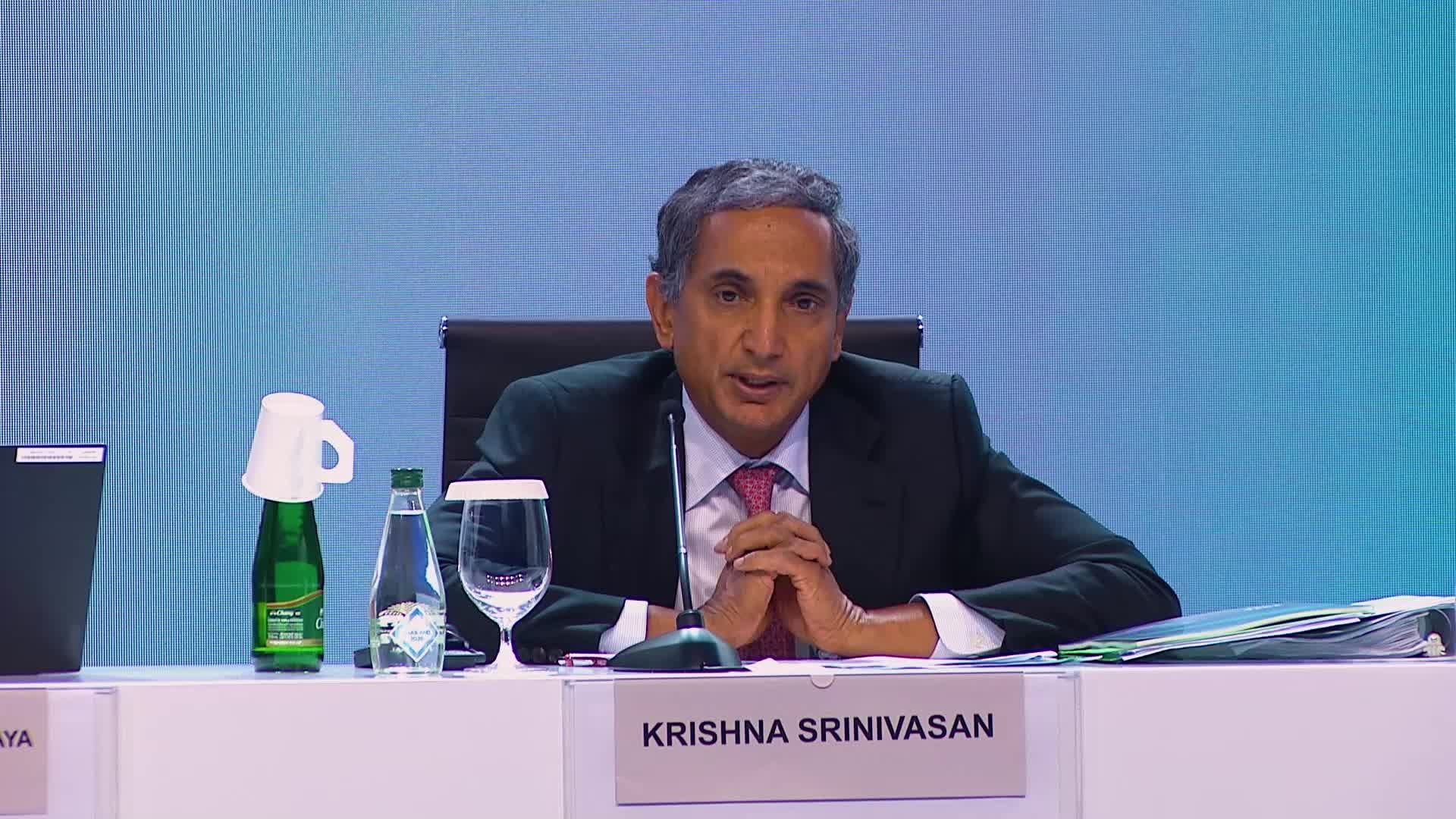
At a press briefing held today, October 14, at the Annual Meeting in Bangkok, Thailand, Krishna Srinivasan - Director of the Asia and Pacific Department, IMF, spoke about the forces currently affecting Asian economies ranging from the Oil shock to the AI boom.
“The Asia Pacific economies have been shaped by three forces. The energy shocks starting in February, which hit a region that is highly reliant on oil and gas, much of it imported from the Middle East.
But some countries have been able to adapt by diversifying import sources for oil, compressing demand and making greater use of alternative energy types. Major economies have also drawn down inventories. In addition, a broad range of policy measures have been implemented to cushion the impact, including measures to contain inflation, mitigate supply disruptions, and support incomes.
Meanwhile, a technology boom has provided a sizable boost to several major Asian economies. Export goods accelerated sharply in the first half of 2026, driven mainly by technology products. Strong demand for AI infrastructure has seen semiconductor demand surge, as has investment in data centers. But Asia's export strength extends beyond the tech boom. Trade has held up better than expected despite tariffs including non-tech, non-tech exports supported by a diversification of export markets and robust intra regional trade.
These developments have been facilitated by deeper trade agreements.”
Srinivasan continued by explaining how the AI boom is reshaping the job market across Asia Pacific.
“Growth has surprised on the upside in India. While growth for Korea and some ASEAN economies has been revised up significantly on the back of the tech boom. By contrast, countries not benefiting directly from the tech boom have seen their growth forecast revised down.
We will present the first empirical evidence on the effects of AI on labor markets in Asia. We find there has been a negative effect on hiring in jobs more exposed to AI, with employer demand down by 10%.
But we also find that this has stabilized even as AI capability has increased, suggesting that AI is reshaping work more than eliminating it, as employers are demanding workers who have AI skills.
There are many structural reform needs across the Asia-Pacific region, but let me highlight four. Addressing youth unemployment and skill mismatches while supporting AI adaptation, strengthening social protection, improving energy security through diversification, renewables and rebuilding buffers, and finally deepening regional integration.”
To watch the full briefing, click here.