
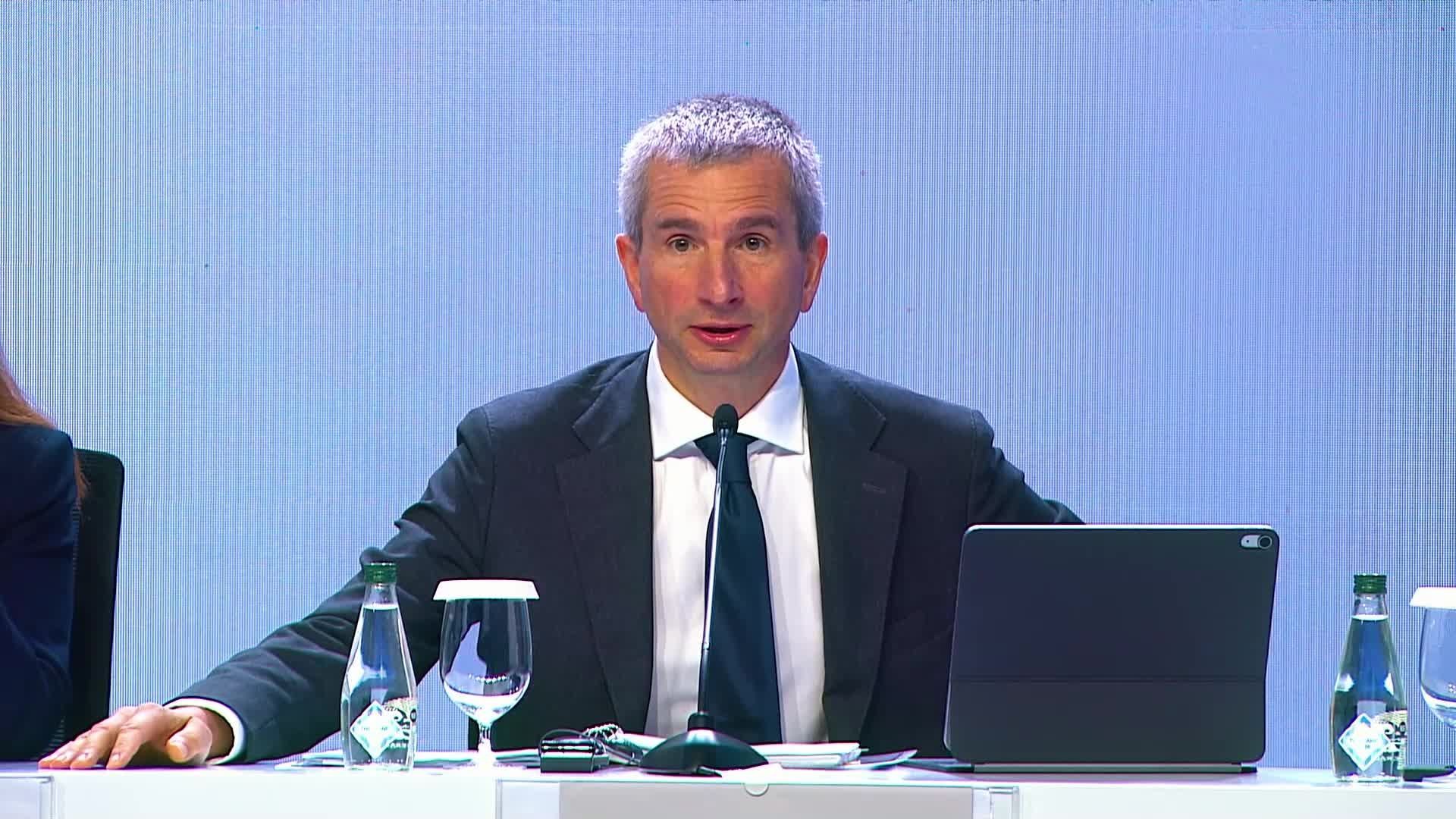
At the regional Economic Outlook for Europe Press Briefing today, October 16, at the Annual meeting in Bangkok, Thailand, Mateusz Szczurek, Director, European Dept., IMF, said that Europe had suffered less than expected due to the wars in Ukraine and the Middle East.
“The European economy continues to be affected by the continuing war on Ukraine and the prolonged war in the Middle East. We would like to report that Europe has weathered the initial impact of the latter far better than feared. One factor behind this is progress towards the energy transition with the adoption of renewable energy reducing reliance on imported fossil fuels.
That's one of the successes of European policies. As a result, growth is lower than expected before the war, but not as low as we feared last time around. Headline inflation has risen markedly, but underlying inflationary pressures remain broadly contained so far. But Europe is not yet out of the woods. The prolonged period of high energy prices will continue to weigh on the economy,
For inflation, we expect it to remain above target in the euro area until 2028 and for even longer in some of the central and south eastern European countries. In such an environment, macroeconomic policy needs to tread carefully and guard against inflationary pressures becoming entrenched.”
Szczurek continued that even though government budgets faced rising spending needs, Europe could unlock stronger growth by following three policy recommendations.
“Government budgets face rising spending needs, particularly for defense, health and pensions, and debt is already high in some countries and rising yields will push the interest bill up.
Europe should choose stronger growth through reforms for innovation, scale and resilience. Protectionist measures or broad based industrial policy can buy time but not prosperity. Let me highlight three priorities. First, continuing the energy transition to build resilience. Europe's energy prices were too high and to volatile even before the war in the Middle East.
Secondly, forging ahead with domestic reforms and strengthening the EU single market is the best way to lift Europe's weak productivity levels. These reforms can also increase innovation, particularly in new high growth industries where Europe has fallen behind.
And third, concerted reform efforts will help the central and southeastern European region to add to its impressive growth record in recent decades. The drivers of this growth are slowing. Competition in the export markets is becoming tougher. The region's share in global FDI is shrinking and support from the EU funds is declining.
The bottom line is that the keys to stronger growth lie in the hands of policymakers across the region. The trick is now to use these keys to unlock stronger growth.”
To watch the full briefing, click here.