
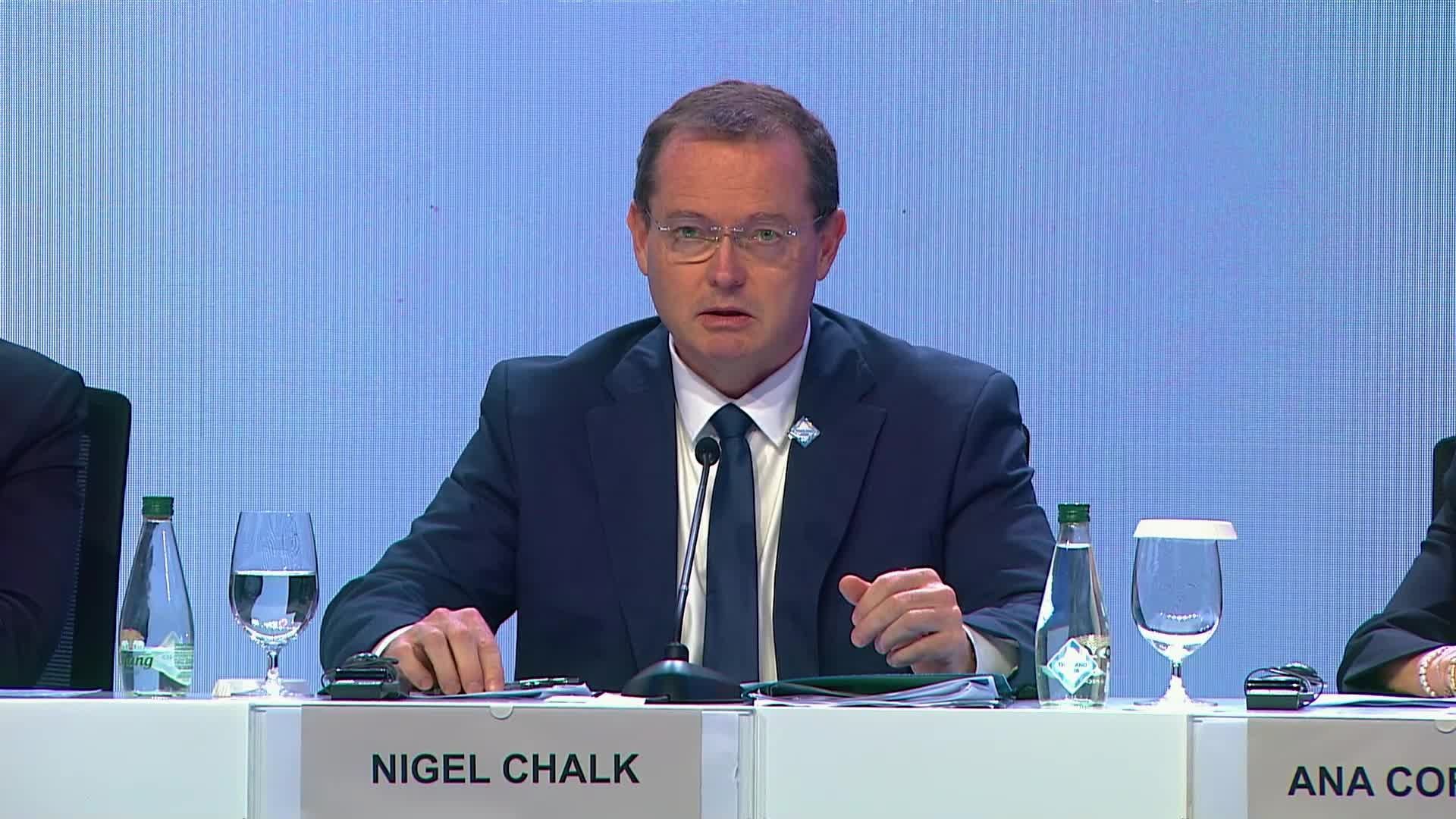
At the Annual Meeting in Bangkok, Thailand, the Director of the Western Hemisphere Department of the IMF, Nigel Chalk, spoke at a press briefing about the Americas are benefiting from location and policy implementations.
“The region's economies are adapting to shifting global circumstances, and in doing so, they've been able to maintain relatively steady growth.
The region is benefiting from improvements in the terms of trade, from supportive financial conditions, robust demand from the United States, strong tourism and remittance inflows into some regions, and from being relatively distanced from ongoing conflicts in the world.
In the United States, activity is being supported by very strong consumption, which in turn is being propelled by a solid labor market and ongoing wealth gains for households, especially from recent increases in financial asset valuations. At the same time, we are seeing an acceleration in technology related investment in the United States, which has offset a slowdown in other types of investment, particularly in structures investment.
However, this tech investment is highly import dependent and together with a strong dollar, is resulting in a relatively large trade and current account deficit for the US. In Canada, trade uncertainty has led businesses to defer new projects, which has resulted in declining business investment through early 2026. However, in recent data, we are starting to see some rebound in both investment and goods exports in Canada.
Mexico is benefiting from strong import demand from the US. Particularly we see it in electronics. The economy is also being helped this year by less restrictive fiscal and monetary policies. In South America, growth is projected at around 2.1% this year and 2.4% in 2027. It's being helped by supportive global financial conditions, high energy and commodity prices, including for food, and increased portfolio and foreign direct investment inflows into the region.”
Chalk went on to say that as public debt and inflation continue to rise, parts of the region could risk falling behind the hemisphere’s more developed economies.
“Headline inflation has risen across much of the Western Hemisphere, even as some countries have been taking steps to reduce the pass through from high world energy prices into the local prices. We also anticipate that El Niño’s impact will add to inflationary pressures through higher food prices.
However, we're confident that the region's central banks are highly tuned to the need to address these growing inflationary pressures and will continue to take the appropriate action to achieve their inflation targets.
If you look at the region as a whole, public debt continues to rise at the same time, the global shift in the appetite for sovereign debt is also moving as we see long term interest rates rise across the globe. While financial conditions for many emerging markets, including in this region, have remained favorable. We have to be concerned that this favorable financial conditions may not last.
There is, therefore, some urgency to address these long standing fiscal imbalances, and for countries to put in place credible fiscal consolidation plans will put debt on a downward path.
Furthermore, the region is aging, and as these demographic shifts take hold, it will slow down the growth in the labor force and that will feed into economic potential.
Without a meaningful acceleration in productivity and inward investment. Latin America risks falling further behind in improving income and living standards, and this is an urgent problem. However, the good news is that these trends can be avoided if countries pursue the right supply side reforms. These include improving the business and regulatory environment, refocusing scarce fiscal resources on productive infrastructure and human capital spending, increasing competition and trade integration across the region, accelerating digitalization and technology adoption.”
To watch the full briefing, click here.